How Jewellers Really Price Gems
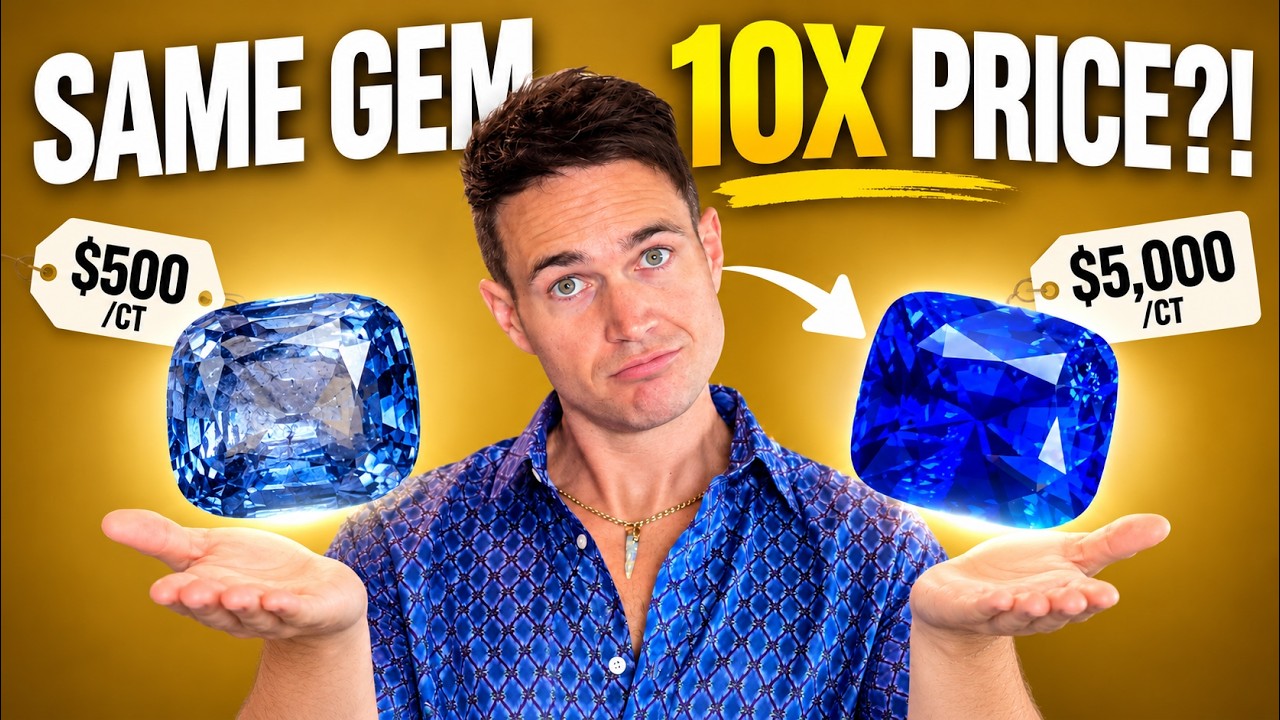
Two gems can look almost the same and still be thousands of dollars apart. So how do you know what a gem is really worth, and how do you avoid overpaying?
Here’s how gemstones are valued, using the same six checks I use every time I buy.
The Short AnswerJewellers value a gem on six things: colour, cut, clarity and carat weight (the 4Cs), plus origin and treatment. I call those last two OT. Most beginners miss them, and they move the price the most.
The 4Cs: Colour, Cut, Clarity and Carat Weight
Every jeweller starts with the 4Cs.
Colour: A Gem’s First Impression
Colour is the first thing you see. It can be bright, deep or soft, and it catches your eye straight away. The more intense and vivid the colour, the more collectible the gem.
Cut: Where the Sparkle Comes From
Cut gives a gem its brilliance, the sparkle you see when it catches the light just right. A well cut gem shines.
Many cutters leave extra weight on a stone, thinking a heavier stone will earn them more. If the cut is off, even a gem with great colour looks dull and lifeless.
Clarity: Eye Clean and Loupe Clean
Inclusions are tiny natural marks inside a gem: little cracks, bubbles or minerals trapped while it grew. There are two terms you should know.
Eye clean means you can’t see any inclusions with your naked eye. Loupe clean means you can’t see a single one, even under a 10x jeweller’s loupe.
Most gems have inclusions, so a clean gem is worth much more. If you want an investment piece, I’d only ever recommend eye clean or loupe clean. If you can see the inclusions, don’t buy it.
Why Emeralds Break the Clarity Rule
Emeralds are the exception. Their inclusions are called jardin, French for garden, and they give an emerald its character. Buyers accept them. When you do find an eye clean emerald, expect to pay two to three times more.
Thinking about an emerald? See my emerald engagement rings.
Carat Weight: Why Bigger Isn’t Always Better
Carat weight measures a gem’s size. One carat weighs 0.2 grams.
Bigger isn’t always better. Choosing a gem on size alone is like picking a date by their height. Height might catch your eye, but personality, charm and intelligence are what count.
The price per carat climbs as the size goes up. The main price steps are 3, 5, 10, 25 and 50 carats. If you’re buying with investment in mind, aim for 3 carats or more. Those stones rise in value faster than stones of 2.5 carats or less.
OT: Origin and Treatment
Now for the two factors most beginners miss. When a gem is valued, origin and treatment matter most.
Origin: Why Burmese Rubies and Kashmir Sapphires Cost More
Origin has a major effect on price. A fine Burmese ruby over 3 carats can cost $50,000 a carat. A ruby from Mozambique might be $10,000 to $15,000 a carat. Much of that gap comes down to where each one was mined.
Why does it matter where a gem was mined? When a mine closes, no more gems come out of it. Every stone from that mine gets rarer, and collectors know it. Only a few change hands each year, so collectors expect their value to climb.
Kashmir sapphires show it best. They’re among the finest sapphires in the world, and the Kashmir mine has been closed for over a hundred years. The finest sell for as much as $100,000 a carat. When one comes to market it’s bought straight away, and owners rarely sell. Sapphires from Ceylon (Sri Lanka) are still highly prized and far more affordable, at around $2,000 to $5,000 a carat.
Treatment: Heated, Unheated and Treated Gems
Treatment is how much a gem has been enhanced to bring out its best. Heated means the gem was exposed to high temperatures to improve its colour and reduce flaws. Treated means any other process, like chemicals or pressure.
These processes improve how a gem looks, and they lower its value. A heated royal blue sapphire might cost around $2,000 to $3,000 a carat. An unheated royal blue sells for $5,000 to $10,000 a carat, because unheated stones are much rarer.
Why Unheated Sapphires Are So Rare
About 98% of the sapphires on the market are heated. In the video I show it with 100 Skittles. Push 98 to the side and you’re left with two. That’s how rare an unheated sapphire is.
This matters. A heated stone that ticks every box on the 4Cs will still only climb slowly in value. Unheated stones are scarce, so their value rises much faster.
So always ask if a gem has been treated. Treatments ruin a gem’s value, so never buy a treated stone. Heated is acceptable.
Every stone I source goes to a reputable gem lab before you pay, so you know exactly what you’re getting.
Gem Prices Per Carat Compared
Here’s how origin and treatment move the price of fine stones.
| Gem | Price Per Carat |
|---|---|
| Kashmir sapphire, the finest | Up to $100,000 |
| Burmese ruby, over 3 carats | $50,000 |
| Mozambique ruby | $10,000 to $15,000 |
| Unheated royal blue sapphire | $5,000 to $10,000 |
| Ceylon (Sri Lankan) sapphire | $2,000 to $5,000 |
| Heated royal blue sapphire | $2,000 to $3,000 |
Each stone’s own colour, cut, clarity and size move it up or down from here.
Buy Your Next Gem With the 4Cs Plus OT
It’s the balance of all six that sets a gem’s true worth. Remember the 4Cs plus OT and you can negotiate with confidence and get the jewel you deserve.
Or let me do the checking for you. As your jewellery buyer’s agent, I look at all six before you spend a dollar, and I’ll tell you why I turn the other stones down. Love sapphires? See my sapphire engagement rings, or start a custom engagement ring of your own.
Buying for a big anniversary? Here’s what to buy her on every anniversary.
Subscribe on the Vivid Jewels YouTube channel for more gem stories.
Got old gold with gems in it? I buy gold in Canberra and pay extra for the gemstones.
Questions About How Gemstones Are Valued
How are gemstones valued?
Jewellers check six things: colour, cut, clarity and carat weight (the 4Cs), plus origin and treatment. Origin and treatment usually move the price the most.
What is the difference between eye clean and loupe clean?
An eye clean gem shows no inclusions to the naked eye. A loupe clean gem shows none, even under a 10x jeweller’s loupe.
Is an unheated sapphire worth more than a heated sapphire?
Yes. About 98% of sapphires are heated. A heated royal blue sapphire might cost around $2,000 to $3,000 a carat, while an unheated royal blue sells for $5,000 to $10,000 a carat.
Why are Burmese rubies and Kashmir sapphires so expensive?
Origin. A fine Burmese ruby over 3 carats can cost $50,000 a carat, against $10,000 to $15,000 for a ruby from Mozambique. The Kashmir sapphire mine has been closed for over a hundred years, and its finest stones sell for as much as $100,000 a carat.
Got gold sitting in a drawer? Here’s how selling it works in Canberra.