1 / 4
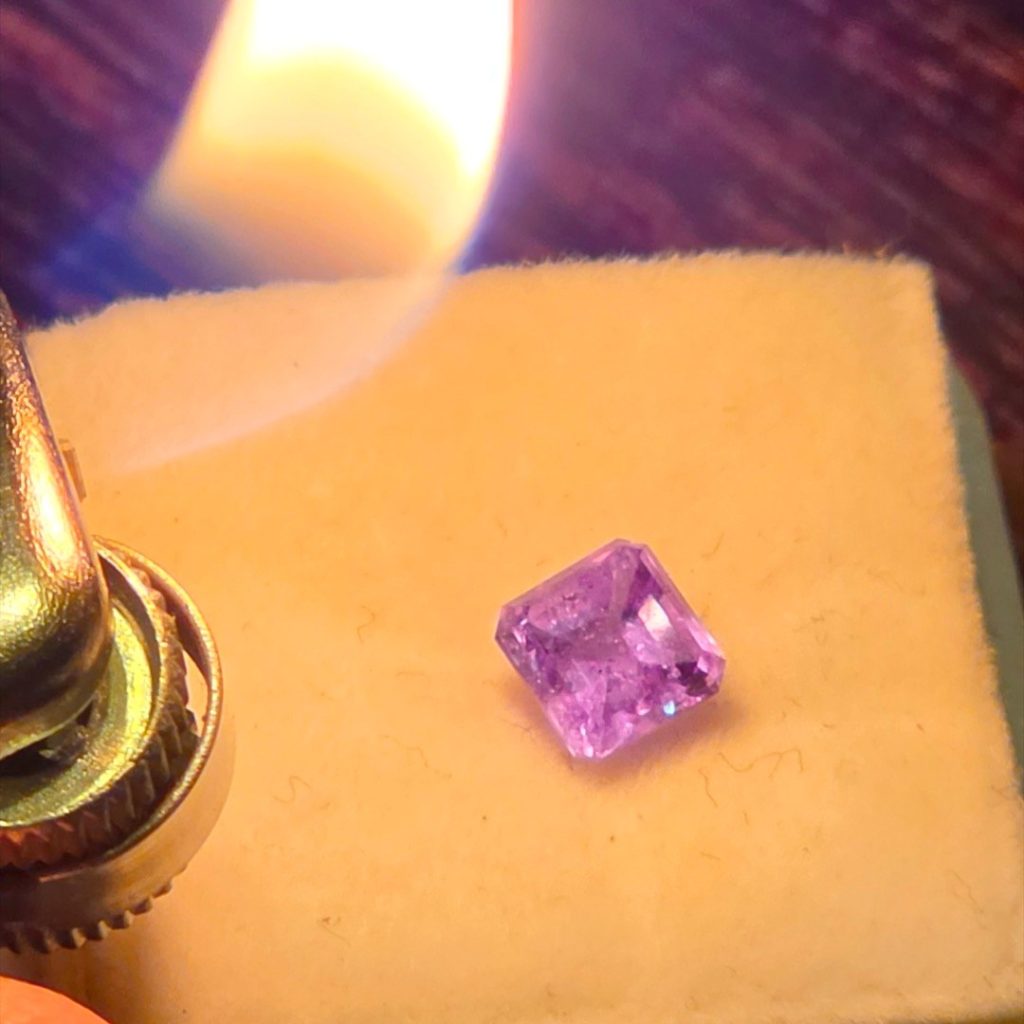
The Vivid Vault · No. 002
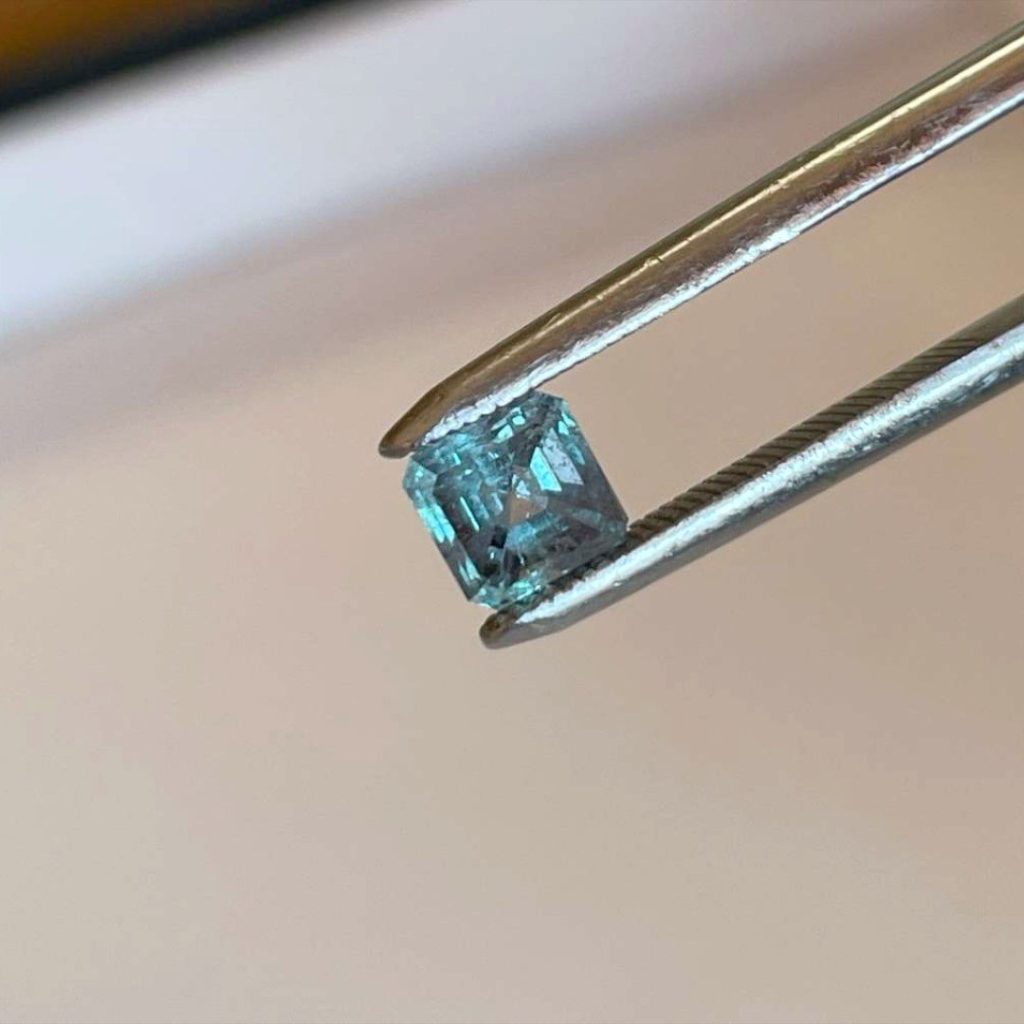
0.94ct Russian Alexandrite
100% Colour Change · Asscher Cut · Unheated · GRS Certified
Sold
Sold
Want one like it? I’ll hunt one down for you.
- OriginRussia
- Colour Change100%
- ShapeAsscher cut
- Weight0.94 carats
- TreatmentUnheated
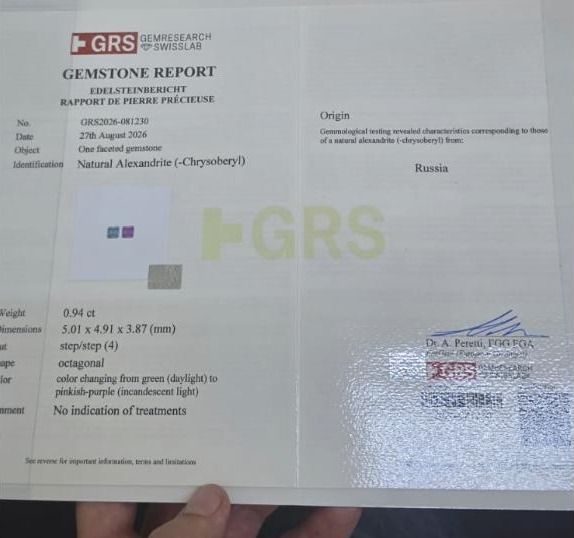
- Lab ReportGRS
Text FIRST LOOK to 0413 474 962 to see the next rare stone before it reaches the Vault.
The Details
| Gemstone | Natural alexandrite (chrysoberyl) |
|---|---|
| Weight | 0.94 carats |
| Origin | Russia |
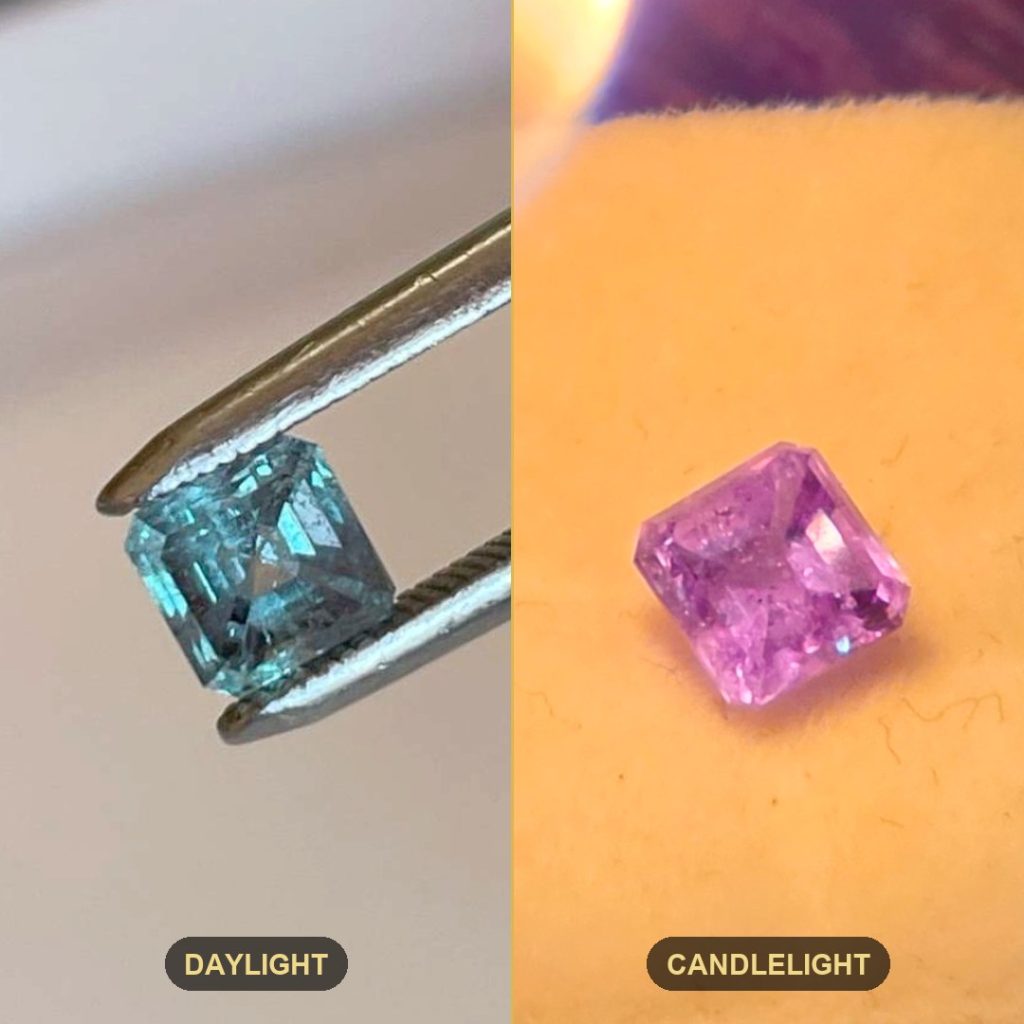
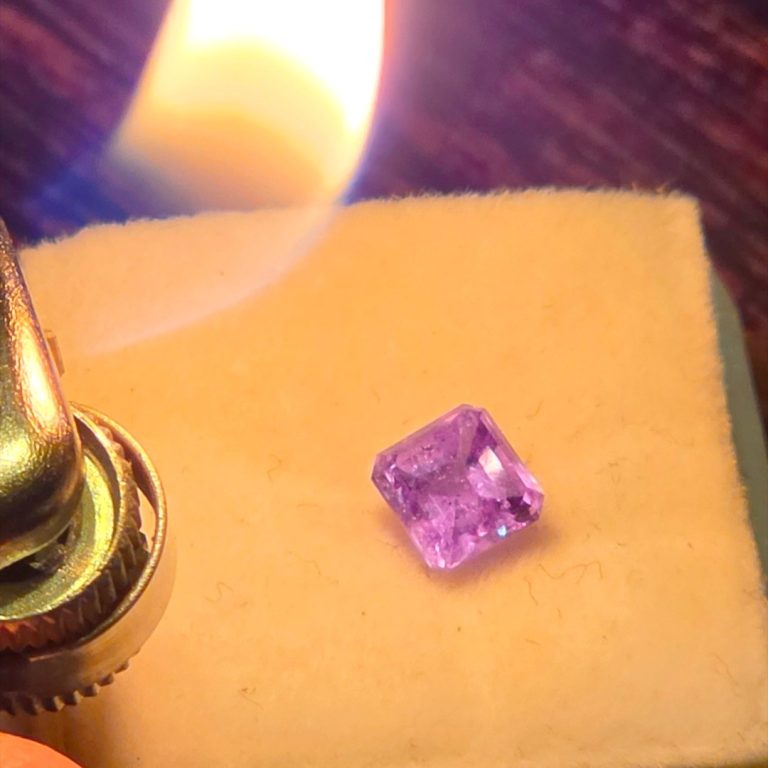
| Colour change | Green (daylight) to pinkish-purple (incandescent light) |
| Strength of change | 100% |
| Shape and cut | Octagonal step cut, an Asscher |
| Size | 5.01 x 4.91 x 3.87 mm |
| Treatment | No indication of treatments |
| Lab report | GRS (GemResearch Swisslab) report GRS2026-081230 |
| Status | Sold |
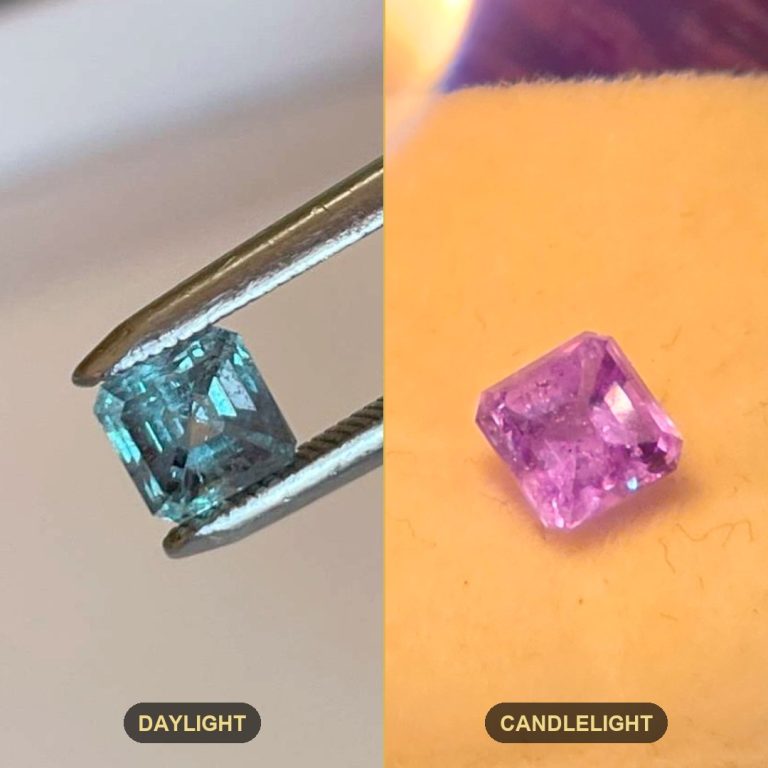
A 100% Colour Change: Green by Day, Pinkish-Purple by Candlelight
They say alexandrite is emerald by day and ruby by night. This one has a 100% colour change, which is extremely rare.
Here’s what that means. With most alexandrites, when you shine candlelight on the stone and it turns purplish red, you’ll still see green coming through. This one fully eclipses the green. In daylight it’s green. By candlelight it turns completely pinkish-purple, exactly as its GRS report puts it: colour changing from green (daylight) to pinkish-purple (incandescent light).
A Russian alexandrite is already extremely rare. One with a 100% colour change is rarer again.
Alexandrite is a moody gemstone. Its colour, its look and its allure shift with the days of the year and the rooms you walk into. A beautiful chameleon of a gem.
Why Russian Alexandrite Is So Rare
Alexandrite was first found in Russia’s Ural Mountains in the 1830s, and named after the future Tsar Alexander II.
Commercial mining stopped in the 1950s. A little trickle came out in the 1990s. Today, the odd stone appears from time to time, and that’s it.
Russians think of alexandrite as their national gemstone. They’d rather keep it at home than see it owned abroad, so most Russian alexandrites change hands between Russians.
Russian vs Brazilian vs Indian vs Sri Lankan Alexandrite
Alexandrite is also found in Brazil, India, Sri Lanka and East Africa. Here’s how the main sources compare, and why the Russian stones are the ones collectors chase.
| Russia | Brazil | India | Sri Lanka | |
|---|---|---|---|---|
| Colour change | Green to red: the sharpest change, and the benchmark | Bluish green to purplish red; strong, often comparable to Russian | Bluish green by day; a good change, mostly in stones over one carat | Yellowish green or olive to brownish red or pink; softer |
| Typical sizes | Small: even one carat is rare | Larger stones turn up | Mostly small; over 3 carats is exceedingly rare | Large, clean stones are found |
| Supply today | Almost none: commercial mining stopped in the 1950s | Limited | Still mined | Still mined |
| Collector appeal | The most collectible of all | High for fine stones | More affordable | Prized for size; more affordable |
Russia is the original source, its mines are shut, and few stones ever leave the country. That’s what makes a fine Russian alexandrite so collectible.
Why Even One Carat Is Rare
Russian alexandrite is very, very rare in larger sizes. Even around one carat is a rare size.
Two carats? That’s unbelievably rare. And a three carat Russian alexandrite puts you up against large Kashmir sapphires and Burmese rubies. Impossible to replace.
An Asscher Cut for Beauty Over Weight
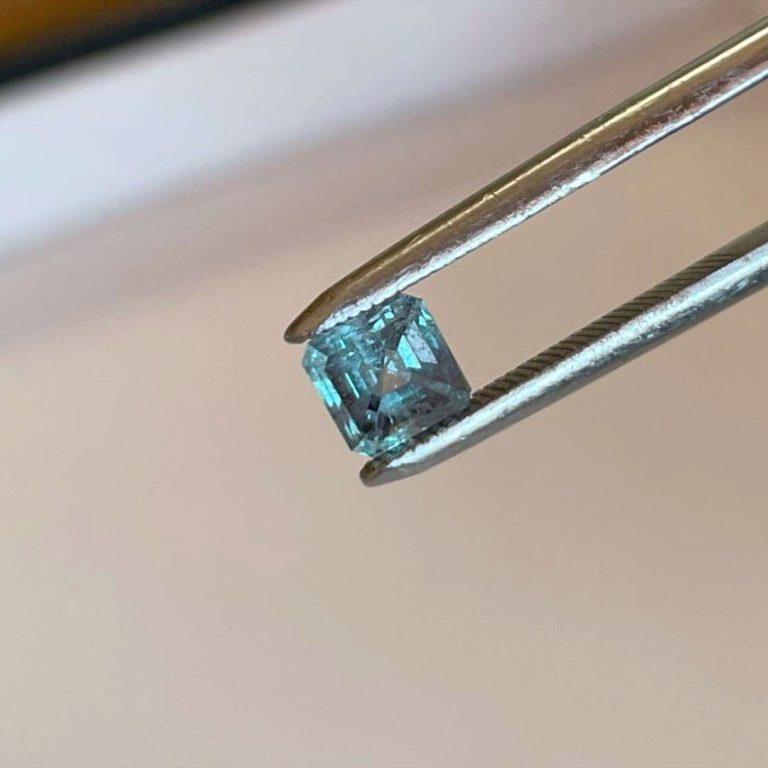
Many alexandrites are cut into teardrops and other shapes to keep as much weight as possible.
This one was cut into a beautiful, masculine Asscher instead. The cutter could have kept it over one carat. They cut it to 0.94 carats to get the best out of the stone, rather than the most carat weight.
GRS Certified: Natural, Unheated, From Russia
This alexandrite comes with a report from GRS (GemResearch Swisslab), one of the world’s leading coloured gemstone labs.
Report GRS2026-081230 confirms a natural alexandrite (chrysoberyl) from Russia: 0.94 carats, octagonal, step cut, colour changing from green (daylight) to pinkish-purple (incandescent light), with no indication of treatments.
It came out of the same private collection as the Neon Jedi spinel.
This One’s Sold. I’ll Hunt One Down for You.
Looking for a Russian alexandrite, or a fine alexandrite from anywhere? As your jewellery buyer’s agent, I’ll hunt one down for you.
Text FIRST LOOK to 0413 474 962 to see the next rare stone before it reaches the Vault.
Questions About Russian Alexandrite
What is Russian alexandrite?
Alexandrite from Russia’s Ural Mountains, where it was first found in the 1830s. Commercial mining stopped in the 1950s, which makes fine Russian stones some of the rarest gems in the world.
What does a 100% colour change mean?
It means the stone fully changes colour. In most alexandrites you’ll still see some green coming through by candlelight. This one fully eclipses the green, turning from green in daylight to pinkish-purple under incandescent light.
Why is Russian alexandrite worth more than Brazilian, Indian or Sri Lankan?
Russia is the original source, its mines are shut, and most Russian stones trade between Russians. Russian stones also show the sharpest colour change. Brazil and Sri Lanka can produce larger stones, and many Sri Lankan stones show a softer change.
Is this alexandrite still available?
No, it’s sold. I can hunt one down for you. Or text FIRST LOOK to 0413 474 962 to see the next rare stone first.
Is this alexandrite heated or treated?
No. Its GRS report shows no indication of treatments. It’s unheated.